

SYSTEMS NOT
LOGOS
Picture these two experiences:
1) The host or hostess greets you by name. After handing them your embossed invitation, you adjust your bow tie or straighten your gown and proceed to walk into the ballroom of your city’s fanciest hotel. A 3-piece jazz quartet plays in the corner as servers come by with trays of champagne. Soon, the silent auction will begin.
2) You know you’re getting close to the right room because the screams are growing louder. As you enter, the pre-K teacher knows your name, but is too busy separating two kids who have gotten into an argument over who broke the crayons (answer: both of them) to greet you. In one corner, a boy is smashing his tin foil costume into a small ball. In another, a girl is pulling down all the streamers hanging from the ceiling that were supposed to be used for the rain scene. Soon, the holiday play will begin.
The marketing challenge? Both of these experiences are for the same brand.
Schools are unique in that way. By nature, schools are complex ecosystems that create content which demand some level of branding support. A poster, a social media write-up, an invitation, a tweet, a WeChat message…
Some companies can get away with a “brand” that consists of a logo, font, and a color or two. A school can’t.


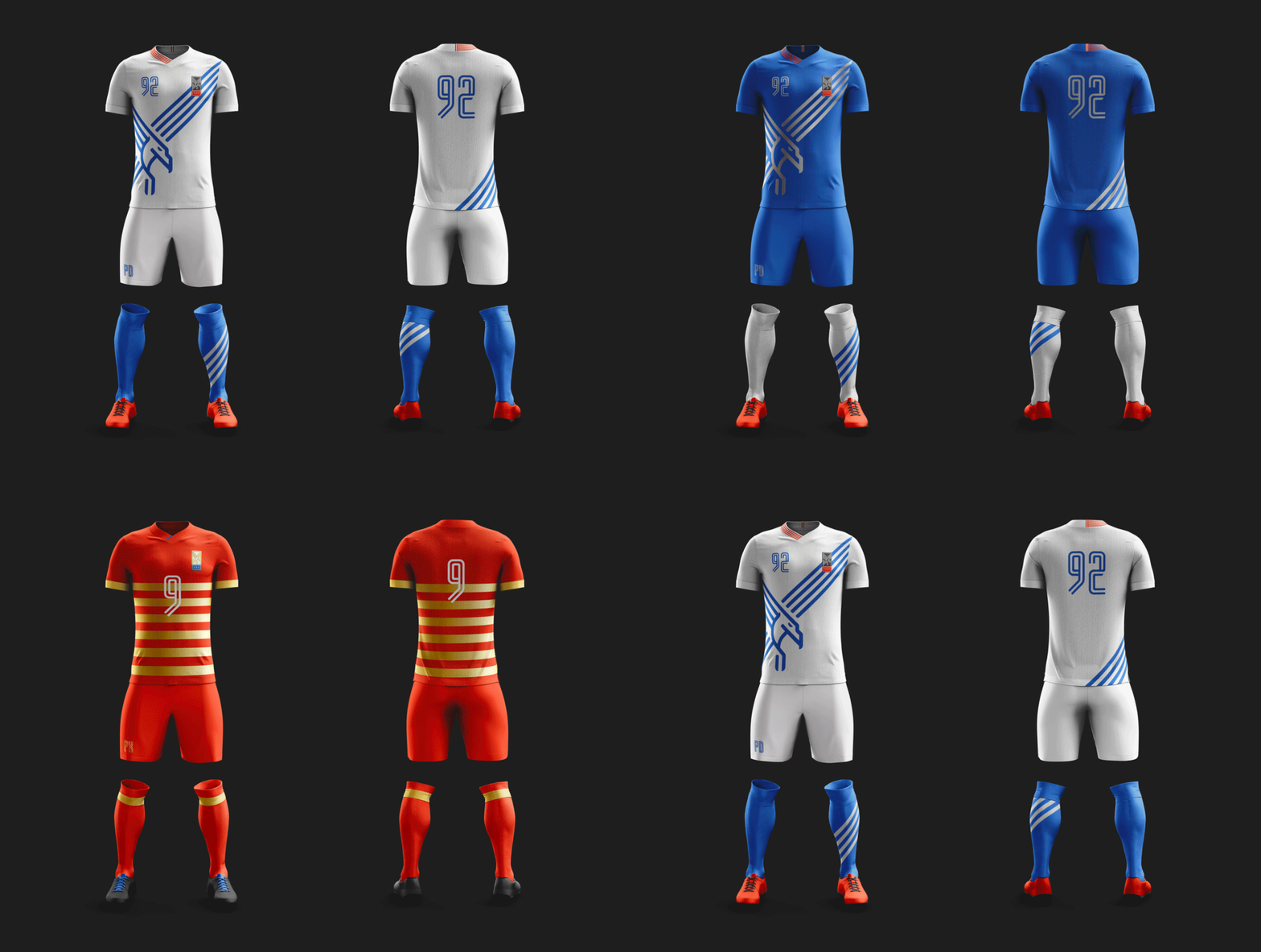
Yet, it’s rare to find a school with an identity system that has the flexibility to support every touchpoint in a unified way. Just look at athletic logos. More often than not, athletic logos have grown out of the athletics department, not the marketing department. As a result, the branding of athletics look entirely disconnected from the branding of the school.
That’s not a small distinction – athletics are often a school’s most outwardly visible identity. But instead of building one cohesive brand, schools are building at least two – the school itself, and its athletic teams. Add on various renegade departments, programs, and ancillary support groups – each of whom would like to do things their own way, thank you – and you can easily see the need for a more comprehensive approach to branding.
Given the opportunity to create branding at SAS, we took a very holistic view. By doing so, we created an identity system that enabled us to consistently express the school’s image in a broad range of environments and experiences.
Yes, even the broken crayon ones.


One of the often-used classic photos at SAS depicts three cheerleaders, each wearing sweaters embroidered with SAS megaphones. (Fun fact: The sweaters in the photo were made in 1946, courtesy of the Shanghai Electric Company.) Upon close inspection, you can see the font of “SAS” on the cheerleaders’ sweaters doesn’t match. This might seem like a small detail, but it makes a larger point:
Historically, SAS had simply not cared about branding.
Consider this: It took the school from its successful beginning in 1912 until 1992 – 80 years after its doors first open – before SAS adapted its first official logo.
Of course, branding is about more than logos. It’s about every touchpoint. It’s about the opportunity to present a school’s range experiences in a way that helps answer the most basic question a prospective family has: Why should I choose this school instead of another? (Marketing leader Andy Macaulay puts it more eloquently: “A brand is a promise for which there is no substitute.”)
Great teachers understand the value of creating distinctive, consistent experiences for students – whether it be a memorable annual lesson or starting each day with a ritual such as sharing an inspiring quote.
Schools should understand this as well.
LACK OF
BRANDING


THE IDENTITY SYSTEM
Shanghai American School (SAS) was established in 1912 and, historically speaking, recruiting students had not been the school’s biggest challenge. As a result, SAS didn’t need to worry about telling its own story. So we didn’t. Instead, we spoke in an indistinguishable voice and exhibited a plethora of inconsistent looks, and missed out on building the SAS brand and story.
Of course, one of the problems with that approach is, if you don’t tell your story, your competitors are happy to do so for you. Shockingly, they might not tell it favorably.
Our reluctance to exercise the power of branding, combined with the fact that Shanghai had become the second most competitive international school market in the world with 57 other international schools at last count, took a toll on demand for an SAS education.


SHANGHAI
2nd
most competitive international
school market in
the world


international schools
But this wasn’t just a need, it was a missed opportunity. After all, we had what was inarguably the most compelling story of any school in the city.
To address the situation, SAS partnered with an award-winning Chicago-based design studio, Firebelly, that specializes in working with nonprofits, and embarked on a year-long branding process. It began with an audit that left on full display the disconnected imagery and verbiage we were touting. It also clarified the opportunity to create a brand identity system which captures and communicates the revealing, real-life story of Shanghai American School.
The result was not a “re-branding.” Rather, it was a “branding.” For the first time in the school’s 100+ year history, the school had a brand identity system that could create consistency and distinctiveness. One that embraced East (our Shanghai location) and West (our American roots), balanced our rich history with our future-forward energy, and ensured a seamless translation across all print, digital, and environmental touchpoints.
The identity system would go on to win multiple marketing awards, beating out universities worldwide.
CULTURAL ARTIFACTS


THE MOTTO
At Shanghai American School, we have a perfect motto. In Latin, the it reads, “Possumus quia posse videmur.” In English, that translates to, “Since we think we can, we can.”
Perfect though it may be, the motto went unused for over 90 years.
The SAS Motto was first seen in the 1917 yearbook. Over the next seven years, it appeared in multiple publications.
And then, without explanation, appearances ceased.
In the fall of 2017, one hundred years after it was first seen, the SAS Motto began to be used again. Because even after a century has passed, there is perhaps no more accurate description of the optimistic spirit of Shanghai American School than “since we think we can, we can.”
The motto serves to remind us of the value of cultural artifacts that schools can occasionally leave behind. Today, it appears on t-shirts, walls, presentations, yearbooks, and even on the chest of Jeff Kinney, author of the Diary of a Wimpy Kid series, who was spotted wearing it during a visit to the school.
SUB-BRANDS
Everyone knows what a car ad looks like. (Windy roads, happy drivers, end shots of vehicles at 3/4 angles…) We know what people who star in pharmaceutical commercials all look like. Unfortunately, all ads about law firms look pretty similar as well.
As much as marketers are supposed to be able to zig when others zag, most marketing tends to follow unwritten rules of their respective categories. As a result, the vast majority of school advertising looks like other school advertising. And that’s not a great role model.
It doesn’t have to be that way.
One of the things we’ve done consistently at SAS is to look beyond the education world for inspiration. Instead of looking at other school marketing, we’ve looked at fast food companies, beer brands, cultural movements…
This approach has uncovered one category that has been most analogous approach to what we believe a school needs to do. As a result, we often tried to act like a museum.
A museum must support a constant churn of exhibits and programs, but in a way that contributes to the awareness and likability of the museum overall. Schools? Same.
At SAS, the identity system took into account all our entities – our athletics, Signature Programs, clubs, support organizations such as PTA and Boosters. It offered enough consistency so each touchpoint could contribute to the visibility and understanding of the SAS brand overall, yet also contained flexibility to celebrate the unique elements of each entity or “sub-brand.”


THE LOGO THAT WASN'T
The SAS identity system was introduced during Founders’ Week 2017. It included events, giveaways, ads and social media, and all new merchandise in the Eagle Shops. What it didn’t include was a new logo.
That was unintentional.
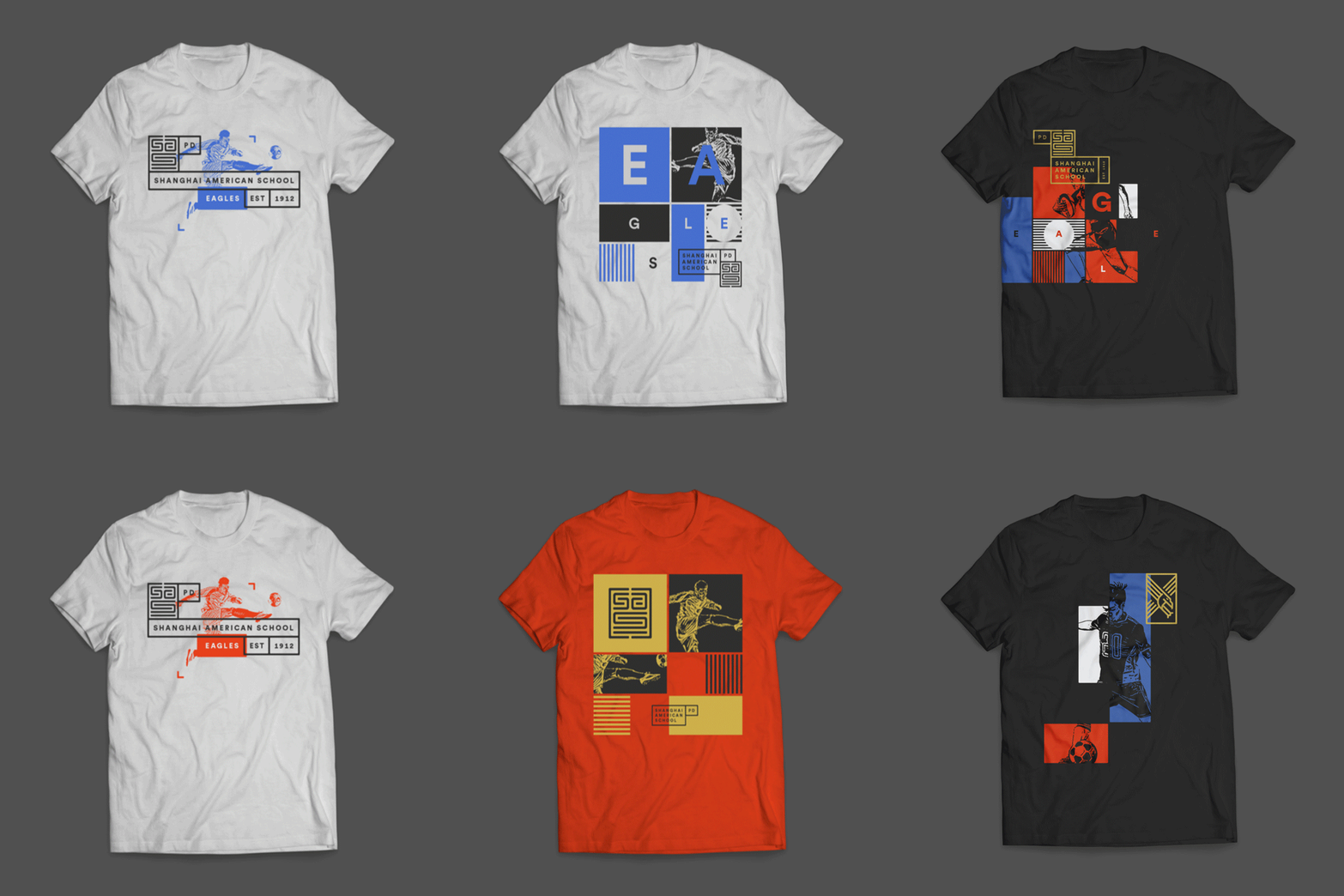
As with most identity systems, the SAS identity system was built around a newly-developed logo – one that utilizes the gridded structure of the system to create a distinctive Chinese chop-like mark.
The mark was called the “Maze” and it was rich in symbolism. The structure echoed the design principles found during the Qing Dynasty, whose reign was ending just as SAS opened its doors in 1912. It offered equitable treatment of the S and the A, symbolizing the school’s balance of Shanghai location and American roots. The wider S stood for “school” and served as a base upon which all else rests. The indentations at the top and bottom were the “river notches” symbolizing the Huangpu river that runs through Shanghai and divides the school’s two campus locations.
During its development, the identity system was shared with over 300 community members – from students and faculty to administration, staff, and parents. Of the 300+, we can count on one finger the amount of people who wanted to stay with the previous logo. We can count on three other fingers who was not happy with the new direction.
In a school as diverse as ours, this is called “unanimous.”


Alas, the school’s Board of Trustees disregarded both community sentiment and professional expertise. Just weeks before the unveiling, they approved the identity system but not the logo upon which it was based.
With so many visual assets, the identity system was strong enough to be launched without a centralizing mark. But the setback took two years and a wealth of unnecessary angst before being resolved and the end result again dismissed all professional recommendations.
As for a lesson to be learned from this story? In the advertising world, there’s a common saying: Don’t buy a dog if you want to bark yourself. Which is to say, if you are a school leader or Board member who wants to get serious about branding, do your institution a favor… Take your time to hire the right experts.
Then listen to them.

THE SAS SPACE
MANIFESTO
As a true nonprofit organization, SAS had a healthy annual budget for facilities construction and renovation. What we didn’t have was a philosophy to strategically guide those facility investments. Instead, we were creating disjointed spaces that reflected whatever philosophy was espoused by the area stakeholders involved.
Seizing upon an opportunity during a library renovation, the SAS chief financial officer at the time gathered our architecture partner, Perkins + Will, and about a thousand members of the community to brainstorm what we as a school should be looking for in our learning spaces.
Out of it grew… well, a mess to be honest. Multiple whiteboards were filled with ideas – some tactical, some strategic. Within the mess, however, were principles that could provide a framework for our facilities. And while the marketing department wasn’t officially tasked with the distillation process, we took it on anyway.


Because, generally speaking, there’s a fundamental difference between marketing types and academic types.
Academic types lean toward the complicated, and are perfectly comfortable generating constellation-type charts and lengthy lists and explanations, all while using a constantly evolving vocabulary that renders as useless the diligent work of the decent people at Merriam-Webster.
Marketing types are simpletons. We believe if it’s not short, simple, and in plain language, people won’t remember it. Including us.
Back to the whiteboards: Out of our work came the SAS Space Manifesto, complete with an inspiring mission-like summary (“If a space delivers everything we expect, it hasn’t been pushed far enough”) and three simple goals:
-
Our spaces should tell our story
-
Our spaces should enable our goals
-
Our spaces should inspire our dreams
It was fully embraced during the library renovation project which became known as the Hub – and that project remains the most thoughtful, intentional space the school has created. Here’s the longer version of the Space Manifesto:


WAYFINDING
Prior to coming to SAS, one of our team members was tasked with creating marketing for Loyola University Health Systems in and around Chicago. As with the marketing of most industries, there are just a few messaging approaches used by all healthcare providers: 1) The great doctors and their impressive alma maters; 2) A new location/wing/service/equipment; 3) The brand’s ranking in the annual U.S. News & World Report healthcare survey.
But during the team’s strategic deep dive, they discovered that what really gave people confidence about Loyola was not any of those things.
It was the fact that, when you pulled into the parking lot at night, all the lights were working. Or, when you walked into the lobby, the plants were not plastic, they were living.
The list went on, and the unexpected items that conveyed reassurance became known as “caring cues.” What was on that list was critical to creating trust. After all, when people come into a hospital, they’re in a threatened mindset. What’s worse, they don’t know the language of the institution.
The exact thing can be said for schools.



As prospective parents enter a school environment, they have on their minds the care of the most important person in the world: Their child. And they’re worried – and it’s unlikely they speak Educationese.
We mention this context because as we talk about wayfinding signage – the signs that help you understand where you’re located in a school, and how to find your next destination – it’s easy to dismiss the importance.
Think back to the “Dead Sea Scroll” campus map that greeted visitors at SAS. The offense wasn’t that the map was outdated or sun-drenched. It was the unmistakably clear message that map sent: The school doesn’t care.
At SAS’ two sprawling campuses, wayfinding continues to be an ongoing job. At its best is the Hub – the library renovation project that inspired the SAS Space Manifesto.
At worst is, well, a lot of the school. In spite of our best efforts, wayfinding continues to offer inconsistent cues. (As of this writing, we have 39 different looks and verbiage that tells people where the bathroom is. This is not an exaggeration.) Of course, families will not decide to attend your school if it’s obvious where the bathroom is located.
But they will decide to attend your school if it’s obvious you care.

We care

NAMING
The high school principal was excited to see us. “We have the perfect name for our new conference room!”
The conference room was part of a renovation the previous summer, and in the rush to finish construction before the school year began, its name had been overlooked.
“Room ’34!”
We smiled and nodded in affirmation, as if we knew what he the hell he was talking about. Fortunately, he went on to explain.
“The name is in honor of our youngest students in Pre-K3 who will be graduating as the Class of 2034. We want to remind our faculty and leaders that we should not just be thinking about our students today – we should be building a program that will serve our future students as well.”
The explanation was both logical and inspiring. What was most inspiring was seeing others around the school share the belief that even a room name could tell a compelling story.


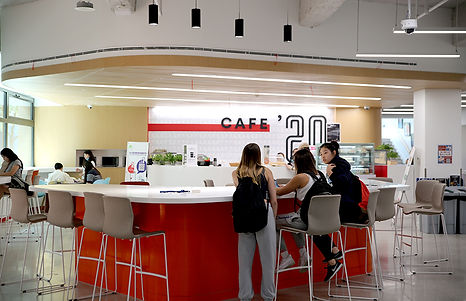
Over the previous years, names had taken on increasing importance – sometimes as important symbols, sometimes as opportunities to tell the SAS story.
Take Café Juno, named after the school’s longest-running tradition. Or the meeting rooms of the Hub, each named after a Shanghai street where the school was once located (complete with a short write up of each campus story).
The name “Eagle Park” came out of an exercise where the elementary school students were asked to name their massive new playground. While “Eagle” wasn’t the most surprising of choices (considering it’s the school’s athletics nickname), what was important was that by calling it a “Park” the name effectively re-framed the space from a playground (which every school has) to a park (which is unique to SAS).
The name Room ’34 makes even more sense when you see its location is down the hall from Café ’20, which is named after the senior class of 2020 – the class that overcame a pandemic. What’s unique about names like Café ’20 and Room ’34 is, they’re intended to change each year, to continue honoring our youngest and oldest students.
It’s a fun idea that breathes new life and graphics into otherwise static spaces. Though admittedly, the people charged with updating our room scheduling software might not describe the idea as “fun.”